The Ripple Effect of Leadership: Why Every Choice Shapes the Future of Your Organization

In the contemporary corporate landscape, executives and managers are confronted with an unprecedented velocity of change. Modern business leaders make countless decisions daily, many of which can easily feel trivial or ephemeral against the backdrop of fast-paced market shifts and quarterly pressures. However, organizational research and decades of management case studies demonstrate that executive decision-making carries a cumulative weight far beyond the immediate moment. Every strategic pivot, operational concession, and personnel choice generates profound ripples. These ripples not only dictate the trajectory of future challenges and opportunities, but they fundamentally define how internal teams and external stakeholders experience a leader’s governance.
The Patagonia Blueprint: A Masterclass in Purpose-Driven Leadership
To understand the long-term compounding effects of executive decision-making, industry analysts frequently point to the corporate evolution of outdoor apparel pioneer Patagonia. Founded by Yvon Chouinard, the Ventura, California-based company has long stood as a global benchmark for integrating environmental stewardship directly into core business operations.
Throughout his tenure as chief executive and primary owner, Chouinard faced numerous junctures where conventional business logic dictated prioritizing short-term financial returns over ecological integrity. Time and again, however, Chouinard steered the company toward choices centered on environmental sustainability and employee welfare, even when those choices imposed significant immediate financial burdens.
Historical corporate timelines illustrate this philosophy in action. In 1994, after conducting an internal environmental assessment that revealed the toxic environmental impacts of conventional cotton production, Patagonia made the costly decision to transition its entire sportswear line to 100% organically grown cotton within an 18-month window. This pivot required severing long-standing supplier relationships, retraining supply chain partners, and absorbing significantly higher materials costs at a time when the privately held company could ill afford operational disruptions.
Rather than damaging the enterprise, this foundational choice created powerful, compounding ripples. The decision fortified Patagonia’s brand authenticity, enabling the company to systematically attract and retain highly motivated, purpose-driven talent while building an exceptionally loyal consumer base. Decades later, this long-term orientation culminated in September 2022, when Chouinard and his family irrevocably transferred ownership of Patagonia to a specially designed trust and a non-profit organization dedicated to combating climate change. The move dedicated all future company dividends—estimated at approximately $100 million annually—to environmental protection.
Corporate governance experts note that Patagonia’s trajectory serves as a primary empirical example of how micro-decisions compound into an unassailable macro-identity. To assist contemporary executives in navigating their own decision-making architectures, leadership consultants and organizational psychologists emphasize three foundational principles designed to ensure positive operational and cultural ripples.
Principle 1: Embracing a Long-Term Horizon Amidst Short-Term Pressures
The first principle requires cultivating a deliberate long-term perspective. In periods of macroeconomic volatility, supply chain disruption, and technological transformation, executive boards and corporate officers frequently default to short-termism. Cutting R&D budgets, deferring sustainability investments, or compromising labor standards to meet quarterly earnings expectations are common defensive maneuvers.
However, business historians and management theorists argue that such practices stem from a fundamental misunderstanding of how operational choices echo across time. Short-term fixes frequently introduce severe long-term vulnerabilities, notably the erosion of institutional trust and the degradation of corporate culture. When leaders prioritize immediate fiscal relief over enduring strategic vision, employees notice the contradiction. Over time, these transactional decisions accumulate, resulting in diminished morale, heightened staff turnover, and vulnerability to market disruptions. A long-term framework demands that executives evaluate current operational choices through the lens of a five-, ten-, or twenty-year horizon, weighing immediate gains against potential cultural and structural liabilities.
Principle 2: Recognizing That Every Choice Authors the Organizational Narrative
The second principle centers on the reality that every executive choice acts as a narrative author for the organization. In organizational behavior, actions consistently speak louder than corporate mission statements, employee handbooks, or public relations campaigns. Every decision functions as a critical juncture—a metaphorical fork in the road that signals to the entire enterprise what truly matters to leadership.
When an organization faces an ethical dilemma or operational bottleneck, the resolution chosen by leadership establishes an internal precedent. If a company publicly champions innovation and psychological safety, yet penalizes employees for calculated, failed initiatives, the leadership’s actual choice contradicts its stated narrative. Employees quickly recalibrate their behaviors to align with observed leadership habits rather than corporate rhetoric. Consequently, where teams focus their energy, how they allocate resources, and the degree of risk they are willing to assume are all direct downstream consequences of past leadership decisions.
Principle 3: Enforcing Rigorous Alignment Between Values and Actions
The third principle mandates absolute alignment between stated organizational values and operational execution. Corporate scandals across the globe consistently underscore the catastrophic cost of hypocrisy in leadership. When organizations and their executives claim to champion integrity, equity, or community responsibility while engaging in contradictory practices behind closed doors, the resulting breach of trust is exceptionally difficult to repair.
Empirical studies on workplace trust consistently demonstrate that organizational cynicism spikes rapidly when a leadership vacuum exists between rhetoric and reality. Once internal trust is compromised, rebuilding it requires years of transparent communication and consistent, corrective behavior. In many instances, the trust deficit proves fatal to executive tenure and corporate reputation alike. Therefore, rigorous alignment ensures that every policy, budget allocation, and operational directive reinforces the core values upon which the enterprise was founded.
The Absence of Neutral Moments in Executive Leadership
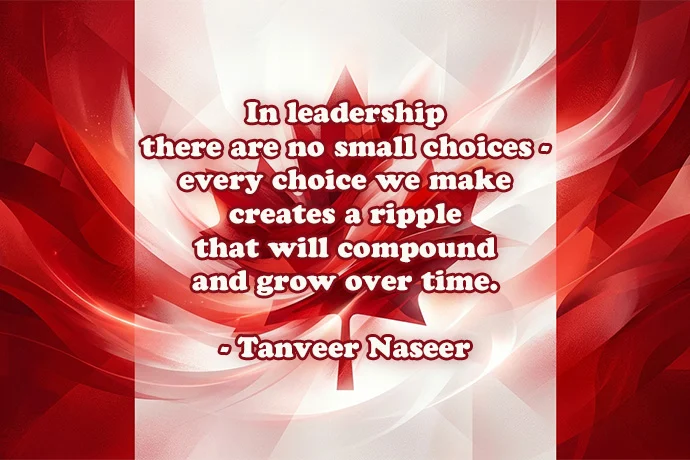
Ultimately, comprehensive analyses of modern leadership structures reveal a fundamental truth: in governance, there are no truly small choices. Every administrative directive, casual interaction, strategic pivot, and budgetary concession initiates a ripple effect. These ripples compound continuously over time, shaping the operational landscape, regulatory standing, and cultural fabric of the organization.
For contemporary executives navigating complex global markets, acknowledging this reality requires profound mindfulness. Leaders must constantly evaluate what their daily choices communicate about their present priorities, while rigorously forecasting the opportunities and liabilities those same choices create for the future. By embracing a long-term perspective, recognizing the narrative power of operational decisions, and maintaining strict alignment between values and actions, leaders can transform routine choices into lasting assets for their organizations.