Tech Pioneer Jeff Atwood and Retired Colonel Alexander Vindman Unite at Cooper Union to Debate the Future of the American Dream

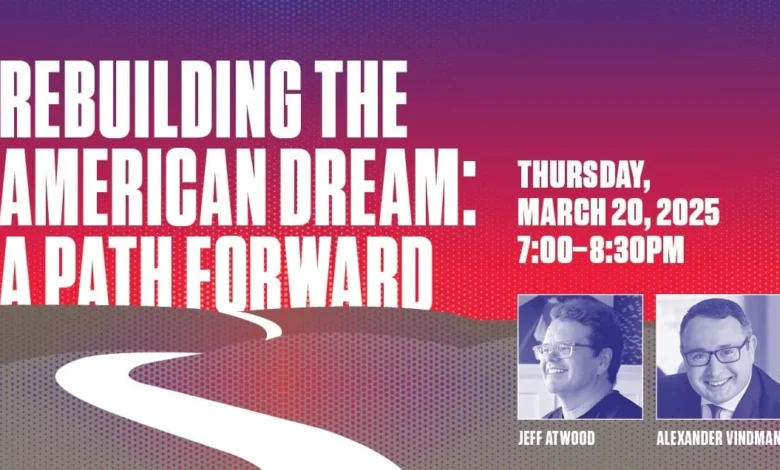
The intersection of digital community governance and national civic duty took center stage as software engineer and Stack Overflow co-founder Jeff Atwood partnered with retired U.S. Army Lieutenant Colonel Alexander Vindman for a high-profile public discussion. Held at the historic Cooper Union Great Hall in New York City, the event addressed the evolving definition of the American Dream, the fragility of democratic institutions, and the pressing need to transition from individual acts of philanthropy to systemic, structural reforms that foster broad-based economic mobility and security.
The dialogue brought together two figures from vastly different professional backgrounds, united by a shared commitment to democratic resilience. Atwood, widely known for his contributions to software architecture and online community building through platforms like Stack Overflow and Discourse, joined forces with Vindman, a national security expert and former National Security Council official whose public testimony in 2019 made him a prominent figure in American political discourse.
Main Facts and Event Overview
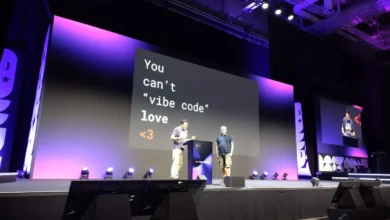
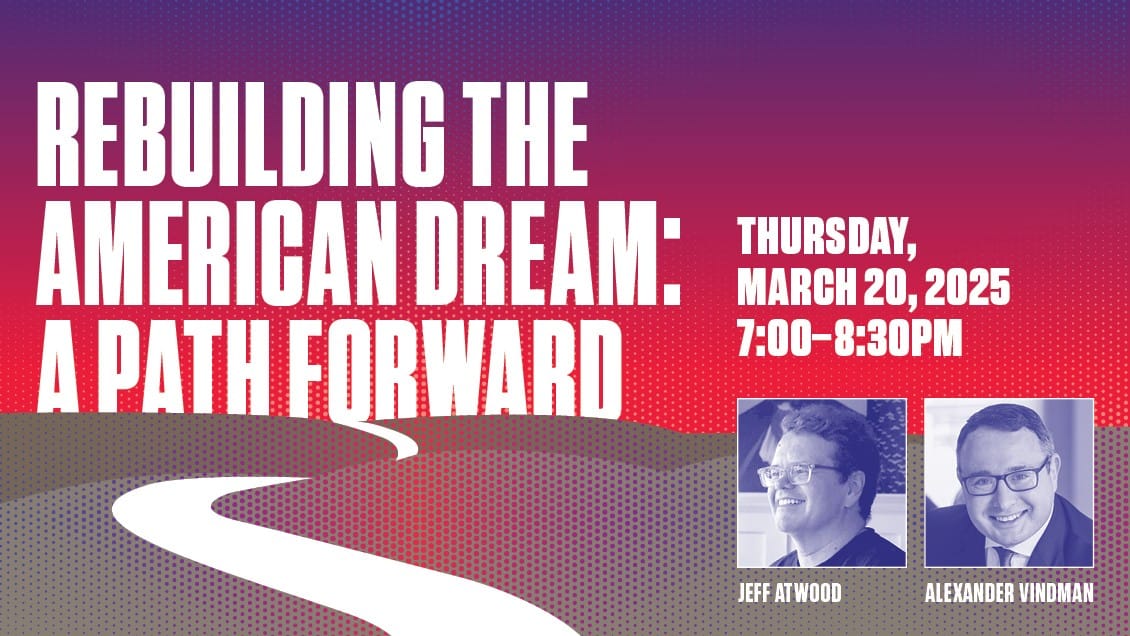
The symposium, titled "Rebuilding the American Dream: A Path Forward," drew a diverse audience of technologists, policy analysts, students, and citizens concerned about the socio-political trajectory of the United States. The venue itself carried profound historical significance; the Cooper Union Great Hall has served as a platform for pivotal political speeches since the mid-19th century, hosting historic addresses by figures such as Abraham Lincoln, Frederick Douglass, and Susan B. Anthony.
At its core, the conversation interrogated a central premise: how the foundational promise of the American Dream—that hard work, fairness, and ingenuity yield upward mobility—can be preserved and expanded in the modern era. Atwood and Vindman examined this challenge through the complementary lenses of geopolitics, civic responsibility, and digital infrastructure.
While the event was structured around an open-ended dialogue, both speakers emphasized that safeguarding democracy is not a passive inheritance but an active, ongoing obligation. The discussion moved beyond abstract philosophical debates to address concrete mechanisms for civic engagement, institutional accountability, and the creation of economic systems that guarantee dignity and opportunity for all citizens.
Background Context: Two Paths to Civic Dedication
To understand the synergy between Atwood and Vindman, observers must examine their distinct yet converging trajectories.
Alexander Vindman’s life story reflects the classic immigrant narrative coupled with extraordinary public service. Born in the Soviet Union, Vindman immigrated to the United States as a young child alongside his family, settling in Brooklyn, New York. He subsequently enlisted in the U.S. Army, embarking on a 21-year military career characterized by distinguished service. Vindman was severely wounded by an improvised explosive device during the Iraq War, an injury for which he received the Purple Heart.
Later in his military career, Vindman attained the rank of Lieutenant Colonel and served as the Director for European Affairs on the National Security Council (NSC). His national prominence surged in late 2019 when he testified before Congress regarding a phone call between U.S. President Donald Trump and Ukrainian President Volodymyr Zelenskyy. Vindman’s adherence to his oath of office and military code—reporting what he perceived as a misuse of presidential authority for political gain—resulted in intense political scrutiny, professional retaliation, and his eventual retirement from the armed forces. Despite the personal and career costs, Vindman’s actions cemented his reputation as a defender of institutional integrity.
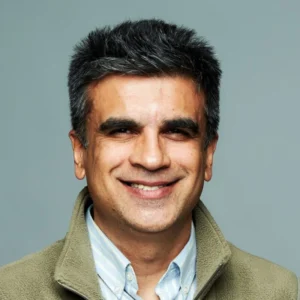
Jeff Atwood, conversely, built his career in the digital realm. As a software developer, author, and entrepreneur, Atwood dedicated decades to understanding how human beings interact, collaborate, and organize themselves online. Alongside Joel Spolsky, he co-founded Stack Overflow in 2008, creating a peer-to-peer knowledge-sharing platform that fundamentally transformed how millions of software engineers solve technical problems worldwide. Later, Atwood launched Discourse, an open-source platform designed to modernize and civilize internet discussion forums.
Throughout his career, Atwood has observed that the structural challenges of managing large-scale digital communities mirror the governance challenges of physical societies. Whether moderating a forum or administering a nation, systems require clear boundaries, enforceable rules, transparent feedback loops, and a shared commitment to the common good—analogous to public infrastructure like local parks or libraries, which are built and maintained for collective benefit.
Chronology and Evolution of the Collaboration
The partnership between Atwood and Vindman did not materialize overnight. It represents the culmination of months of intellectual exploration by Atwood regarding the concept of civic preservation—a theme he explored extensively in his writing, notably in his essay series "Stay Gold America."
- Late 2024: Atwood published writings reflecting on the necessity of holding onto foundational democratic ideals, arguing that maintaining a cohesive society requires deliberate, sometimes difficult conversations about national identity and civic responsibility.
- Early 2025: Discussions began regarding a collaborative public appearance that could bridge the gap between national security, governance, and community architecture.
- Two Weeks Prior to the Event: Atwood formally announced his upcoming partnership with Vindman, highlighting the Colonel’s courage and framing the discussion around the future of economic mobility and democratic stability.
- The Cooper Union Event: The speakers convened on stage for a moderated discussion and audience Q&A session, which was broadcast globally via the Cooper Union Great Hall’s official YouTube channel.
Supporting Data and Systemic Analysis
A recurring theme during the discussion was the shift from individual generosity to institutional reform. According to economic and sociological data, traditional metrics of the American Dream—such as the likelihood of children earning more than their parents—have experienced stagnation over recent decades. While charitable giving and individual philanthropy remain high in the United States, experts note that private donations alone cannot substitute for robust public infrastructure, equitable tax policies, and accessible education and healthcare systems.
Atwood argued that modern governance and digital community building share underlying algorithmic and psychological principles. When online platforms fail to establish fair, transparent moderation and inclusive participation mechanisms, they devolve into toxic environments. Similarly, when national economic and political systems fail to provide security, dignity, and upward mobility, public trust erodes, leading to societal polarization.
Vindman reinforced this analysis from a geopolitical and institutional standpoint. He noted that democracies are uniquely vulnerable to internal decay when citizens become complacent and institutions are treated as disposable rather than precious. His military background instilled a deep appreciation for chain-of-command, accountability, and adherence to foundational laws—principles he believes must be fiercely protected within civilian government institutions.
Broader Impact and Implications
The collaboration between a veteran military official and a software pioneer underscores a broader, contemporary realization: the defense of democracy requires interdisciplinary expertise. As digital networks increasingly influence public discourse, polarize electorates, and distribute information, the tools used to govern online spaces are intersecting with traditional political science.
Analysts suggest that events like the Cooper Union symposium signal a growing appetite for constructive, cross-sector dialogues that bypass partisan talking points. By focusing on foundational systems rather than transient political cycles, figures like Vindman and Atwood aim to mobilize a new generation of technologists, veterans, civil servants, and ordinary citizens to rethink how democratic institutions can be updated for the 21st century.
The conversation ultimately issued a call to action for collective responsibility. Whether through writing open-source software, serving in public office, participating in local civic organizations, or demanding transparency from elected officials, the preservation of the American Dream remains an ongoing project—one that demands the active participation of every member of society.
Related posts: