Multilingual Text Classification with Scikit-LLM and Multilingual Embeddings

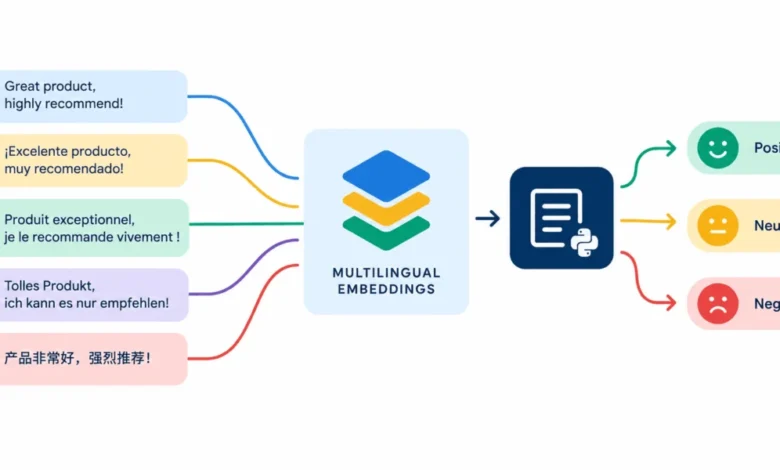
The rapid evolution of Large Language Models (LLMs) has fundamentally altered the landscape of Natural Language Processing (NLP), particularly in the domain of multilingual text classification. Traditionally, developers seeking to categorize user-generated content across different languages were forced to maintain a fragmented architecture. This often involved building and training individual machine learning models for each specific language—a strategy that is not only resource-intensive but also difficult to scale as a business expands into new global markets. Today, the integration of multilingual embedding models with robust frameworks like Scikit-learn and Scikit-LLM allows for a unified, "barrier-free" approach to text classification that transcends linguistic boundaries.
The Evolution of Multilingual NLP
Historically, the challenge of multilingual classification was addressed through machine translation. Companies would first translate all incoming text into a "pivot language," usually English, before passing it through a standard classifier. While functional, this method introduced significant latency and often resulted in the loss of nuanced sentiment or context during the translation process. Furthermore, relying on third-party translation APIs introduced recurring costs and privacy concerns regarding data transmission.
The current paradigm shift relies on multilingual embeddings. These are high-dimensional vector representations generated by models pre-trained on vast, diverse datasets spanning hundreds of languages. By mapping text into a shared "vector space," these models ensure that semantic concepts—such as the sentiment of a product review—occupy similar positions regardless of the language used. For instance, the sentiment expressed in an English phrase and its Spanish equivalent will result in nearly identical mathematical vectors, allowing a single downstream classifier to interpret the underlying meaning without needing to understand the syntax of either language.
Technical Implementation and Infrastructure
To implement this without relying on expensive, proprietary APIs, developers are increasingly turning to local, open-source solutions. A primary example of this is the BGE-M3 model, a state-of-the-art embedding model capable of processing multilingual inputs with high efficiency. By utilizing the Ollama distribution, engineers can run these models locally, ensuring data sovereignty and eliminating per-token costs.
The process begins with the installation of the necessary dependencies, including the Scikit-LLM library, which bridges the gap between LLM capabilities and the standard Scikit-learn workflow. Once the Ollama server is initialized in the background, the BGE-M3 model can be pulled and configured to serve as the vectorization engine.
# Installing core dependencies for the pipeline
pip install scikit-llm datasets

# Initializing the Ollama server for local embedding generation
import subprocess
import time

# Launching the server instance
subprocess.Popen(["ollama", "serve"])
time.sleep(5)
ollama pull bge-m3
By configuring Scikit-LLM to point to the local instance at http://localhost:11434/v1/, the system treats the local LLM as a standard endpoint. This modularity is a critical feature, allowing for the rapid swapping of models as more advanced versions are released by the open-source community.
Dataset Preparation and Model Training
The effectiveness of this pipeline is best demonstrated through the analysis of the Amazon Multi-language Reviews dataset. This corpus contains millions of user reviews across various languages, each tagged with a 1 to 5-star rating. To maintain a manageable experimental scope, researchers typically downsample the dataset to a balanced set of entries, ensuring that the training phase includes equal representation from languages like English and Spanish.
After shuffling the data to prevent bias, the pipeline is constructed using a two-stage process. The first stage, the GPTVectorizer, transforms raw text into numerical embeddings. The second stage, a standard Scikit-learn LogisticRegression classifier, learns to map these embeddings to the appropriate star rating. Because the embeddings are language-agnostic, the logistic regression model effectively learns to categorize sentiment based on the vector geometry rather than linguistic features.
Analysis of Performance and Limitations
Experimental results from this architecture often show strong performance in identifying extreme sentiments—specifically 1-star and 5-star reviews. The model excels here because these reviews typically contain strong, polarized language that is easily captured by the embedding space. However, performance often dips when classifying intermediate ratings (e.g., 2, 3, or 4 stars).
There are two primary factors contributing to this performance gap. First, intermediate reviews are inherently more ambiguous, often containing mixed sentiments that are harder to categorize even for human annotators. Second, the sample size used in initial experiments is often insufficient for the model to capture the subtle nuances of "moderate" satisfaction. Increasing the volume of training data, or moving to a more complex classifier like a Random Forest or Gradient Boosting machine, can often bridge this gap.
The Broader Implications for Global Business
The transition to unified multilingual pipelines has profound implications for global enterprises. For customer support teams, this technology enables the automatic routing of tickets based on sentiment and urgency, regardless of whether the customer writes in Japanese, French, or Portuguese. For market researchers, it allows for the real-time aggregation of brand sentiment across global social media platforms without the overhead of maintaining regional data teams.
Furthermore, the shift toward open-source, locally hosted LLM pipelines marks a departure from the "black box" model of AI deployment. By owning the entire stack—from the embedding generation to the final classification—organizations gain better control over their data privacy, security, and cost structures. As BGE-M3 and similar models continue to improve in their multilingual capabilities, the necessity for language-specific models will continue to diminish, eventually becoming a legacy approach.
Conclusion and Future Outlook
Building a multilingual classification pipeline using Scikit-LLM and local embeddings is no longer an experimental luxury; it is a pragmatic solution to a longstanding bottleneck in NLP. By leveraging the semantic depth of modern embedding models, organizations can reduce the complexity of their machine learning infrastructure while simultaneously improving their ability to process global data.
As the industry looks forward, the focus will likely shift from the mechanics of "how to build" these pipelines to the optimization of the models themselves. Fine-tuning the embedding layer for specific domains—such as legal, medical, or technical support documentation—remains the next logical step. By combining the strengths of Scikit-learn’s established machine learning ecosystem with the transformative power of modern LLMs, developers are now equipped to build truly global applications that function seamlessly across the linguistic spectrum. The era of building a separate model for every language is coming to a close, replaced by a more elegant, efficient, and unified approach to global data analysis.
Related posts: