AI-Powered Climate Models Breakthrough: Researchers Transform Air Quality Forecasting from Days to Seconds

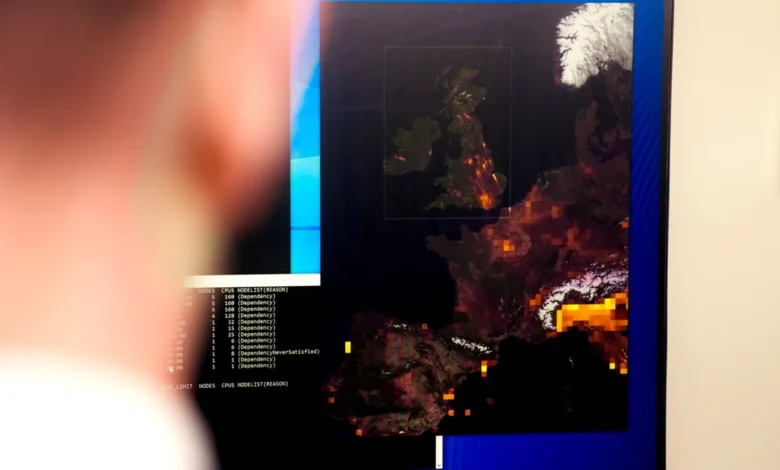
Air pollution remains one of the most critical public health crises of the modern era, contributing to an estimated 30,000 deaths in the United Kingdom alone in recent years while imposing a multi-billion-dollar burden on national economies and healthcare systems. For decades, atmospheric scientists have relied on traditional chemistry-based models to understand and forecast these airborne hazards. However, these legacy computational methods suffer from a severe limitation: the complex chemical equations required to simulate atmospheric reactions demand immense computing power. Consequently, traditional air quality models are extraordinarily expensive to operate, restricted in geographic resolution, and incapable of providing the real-time insights required for proactive public health interventions.
A collaborative breakthrough led by researchers at the University of Manchester, in partnership with NVIDIA and the Bristol Centre for Supercomputing, has successfully bypassed these computational bottlenecks. By repurposing generative artificial intelligence frameworks originally designed for global weather forecasting, scientists have developed a high-resolution, lightning-fast air quality model. This innovation not only slashes the time required to train and run environmental simulations from weeks to mere days, but it also democratizes advanced climate science, shifting the capability from massive national supercomputers down to compact desktop systems.
The Genesis of an AI-Driven Atmospheric Model
The project began when David Topping, a professor in the Department of Earth and Environmental Science at the University of Manchester, recognized a parallel in computational challenges. While reviewing the NVIDIA Earth-2 family of open AI models and tools, Topping observed how successfully the platform had resolved complex macro-weather forecasting hurdles through generative machine learning. He posed a fundamental question to his research team: could these same generative frameworks be adapted to simulate complex pollution fields?
In traditional environmental modeling, integrating atmospheric chemistry causes computation speeds to plummet. Simulating how chemical pollutants interact, disperse, and react under varying meteorological conditions creates a massive web of differential equations. Topping and his colleagues theorized that generative AI could learn the underlying physics and chemistry from historical data, effectively bypassing the need to compute every individual reaction from scratch in real time.
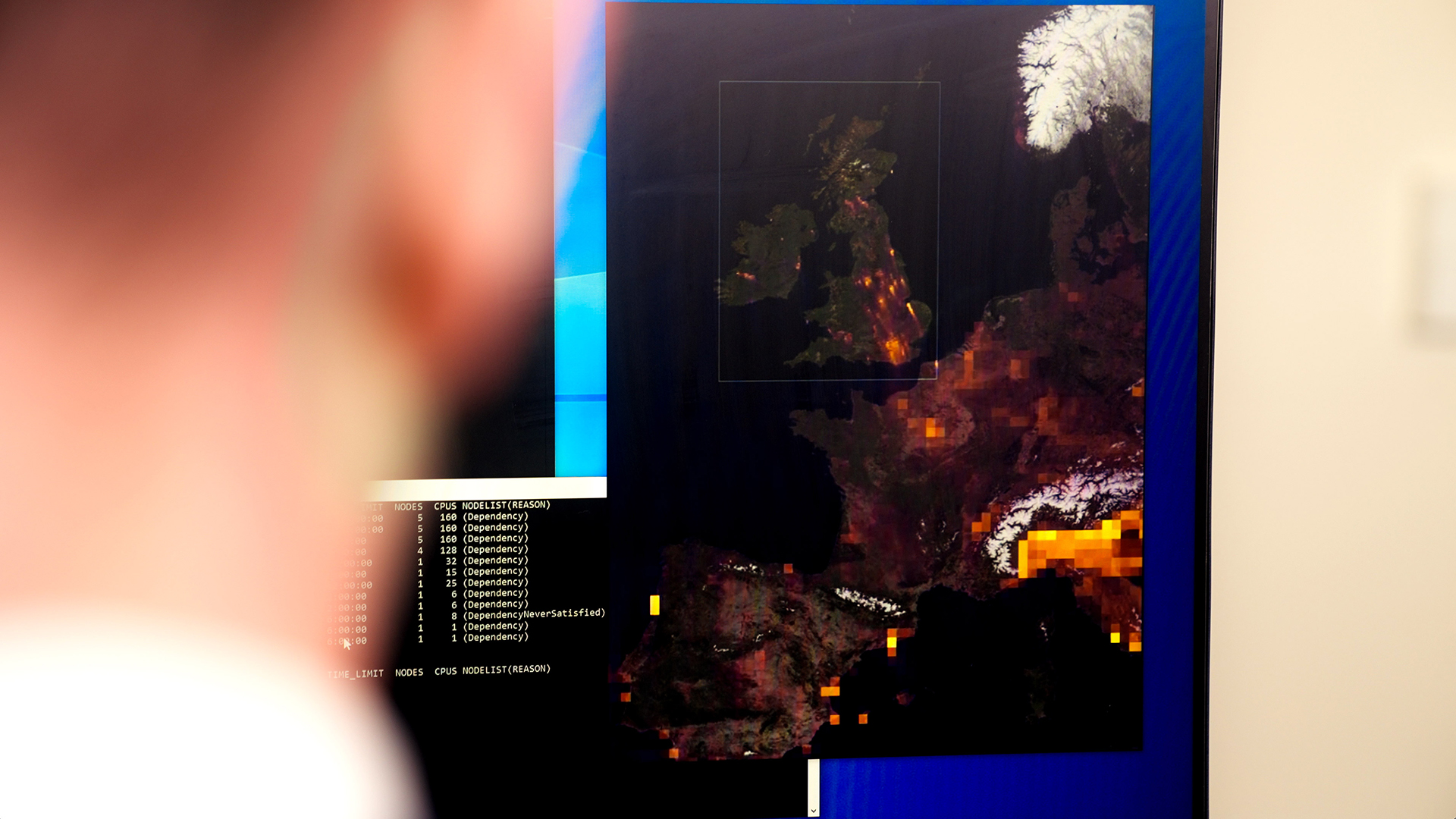
Working closely with the NVIDIA Earth-2 team, the University of Manchester researchers initiated a structured workflow. First, they synthesized a robust training dataset spanning a full year of hourly U.K. pollution simulations. This historical archive provided the foundational data necessary to train the AI on how pollutants disperse across varied terrain and under changing weather patterns.
From National Supercomputing Nodes to the Desktop
The training phase of the project leveraged Isambard-AI, the United Kingdom’s most powerful AI supercomputer, housed at the University of Bristol. Powered by thousands of NVIDIA GH200 Grace Hopper Superchips, Isambard-AI delivers an astonishing 21 exaflops of AI performance.
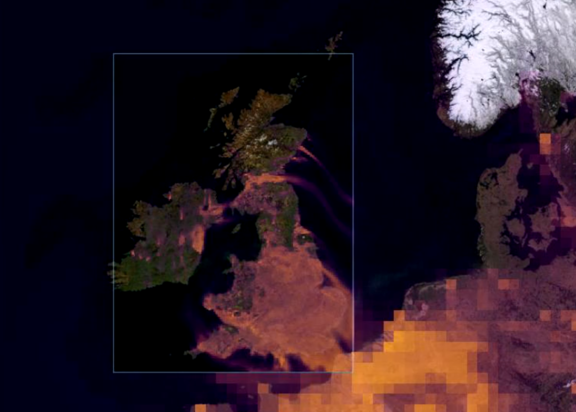
The researchers deployed Earth-2 CorrDiff, a specialized generative downscaling model designed to refine coarse meteorological data into high-resolution local forecasts. Utilizing just a single, eight-GPU node on Isambard-AI, the model completed its primary training cycle in a mere two days. Topping’s team successfully mapped U.K.-wide pollution at an ultra-fine resolution of two to three square kilometers.
According to Simon McIntosh-Smith, director of the Bristol Centre for Supercomputing and co-founder of Isambard-AI, the efficiency of the workflow was a standout achievement. He noted that the project demonstrated an optimal use of world-class hardware, consuming relatively low GPU hours and drawing minimal power compared to traditional brute-force chemical simulations.
Following the success of CorrDiff, the team expanded its technological repertoire by incorporating Earth-2 StormCast. This advanced model enables time-dependent forecasting that can directly ingest live air quality observations. Hao Zhang, a doctoral student at the University of Manchester who trained StormCast on Isambard-AI, highlighted the seamless interoperability of the NVIDIA framework ecosystem, noting how efficiently the software transitioned between different modeling tasks.
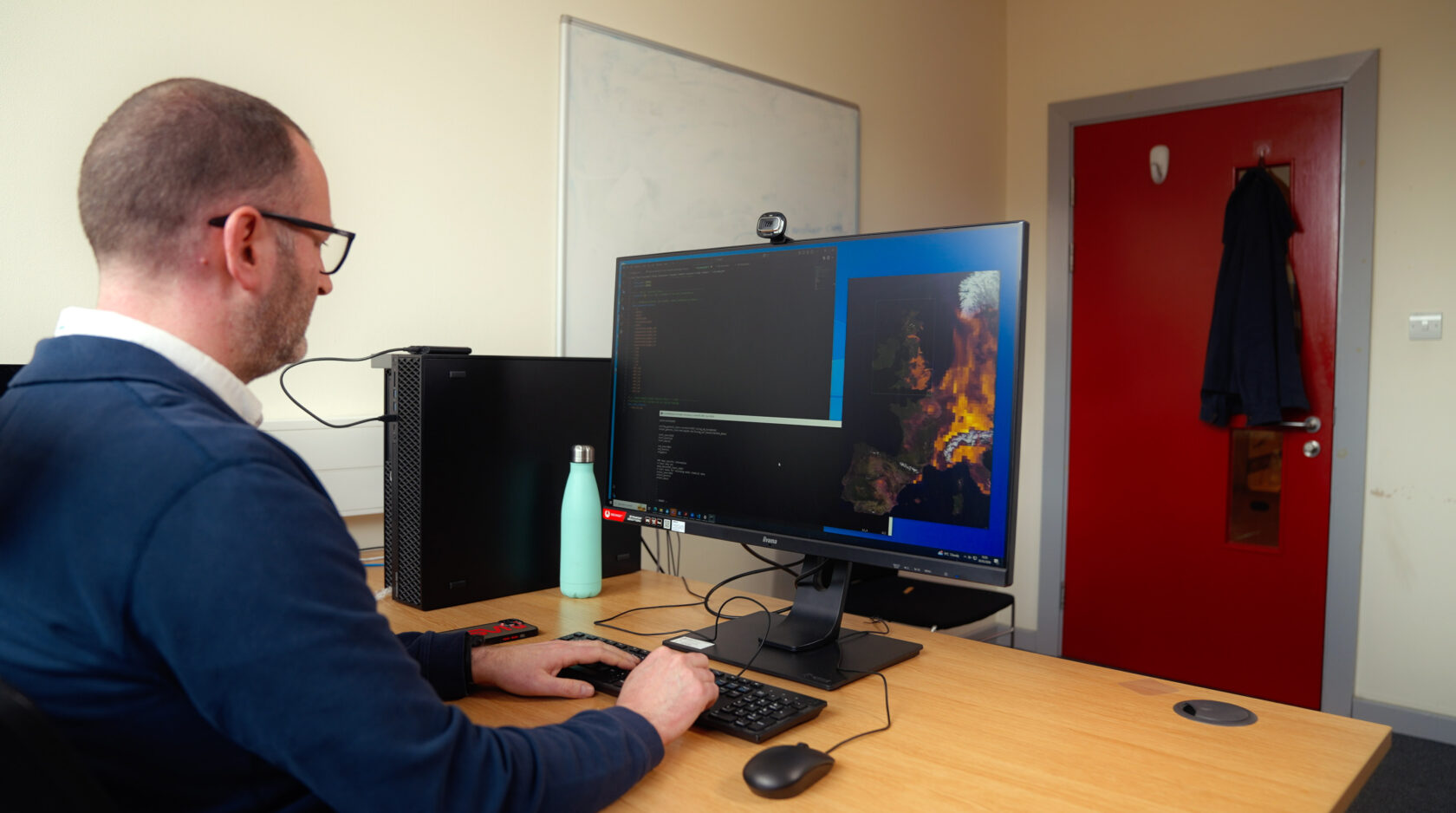
Crucially, the research team proved that these complex workflows are not confined to multi-million-dollar national facilities. By running inference and smaller training tasks on the NVIDIA DGX Spark—a personal AI supercomputer powered by the GB10 Grace Blackwell superchip—Topping demonstrated that cutting-edge atmospheric modeling can be performed right from an office desk. This dramatic reduction in hardware requirements fundamentally alters who can conduct advanced environmental science and how rapidly they can iterate on their research.
Proactive Public Health and Policy Applications
The practical implications of this technological leap extend far beyond academic research, offering tangible solutions for public health administration and environmental policymaking. By providing a detailed, nationwide pollution model capable of running simulations rapidly, scientists can now accurately project future scenarios. This includes evaluating the potential environmental outcomes of proposed government policy interventions, such as low-emission zones, industrial regulatory changes, or urban traffic restrictions before they are formally enacted.
Furthermore, healthcare organizations stand to benefit immensely from shifting their operational posture from reactive treatment to proactive prevention. Topping envisions a future where regional and national health services integrate these AI-driven forecasts directly into patient care. For instance, individuals suffering from chronic respiratory conditions such as asthma could receive automated, personalized notifications warning them that localized air pollution levels are projected to spike dangerously high over the coming days.
In emergency scenarios, the integration of these models with edge AI devices offers a powerful tool for real-time crisis management. By ingesting live sensor data during events like major industrial accidents or seasonal wildfires, the system can dynamically track particulate spread and assist emergency responders in real time.
Open Science and the Agentic Future of Climate Research
Committed to a philosophy of collaborative global impact, the University of Manchester team plans to release their training data and open-source workflows to the international scientific community. The overarching goal is to enable researchers in every country and major metropolitan area to harness small bursts of supercomputer AI time to build localized, highly detailed pollution models tailored to their unique geographic and demographic conditions.
Looking toward the horizon, Topping outlines an even more accessible future driven by agentic AI interfaces. Within the next five years, he anticipates that clinicians, urban planners, and government agencies will no longer need to manually configure complex software environments. Instead, a user might simply pose a natural language query—such as asking an AI assistant to predict neighborhood-level air pollution for the following afternoon—and a sophisticated chain of underlying AI models will automatically retrieve observations, run simulations, and deliver precise, scientifically grounded answers.
As Niall Robinson, developer relations manager for weather and climate at NVIDIA, aptly summarized, the speed and accessibility achieved by coupling advanced AI superchips with open workflows mark only the beginning of a global transformation in environmental modeling. Through this convergence of high-performance computing and generative artificial intelligence, the scientific community is well-equipped to turn the tide against the invisible threat of air pollution.