Enterprise automation represents the strategic coordination of business rules, digital workflows, cross-platform integrations, and governed artificial intelligence to facilitate the movement of work across an organization. Rather than functioning as a mechanism for workforce reduction, this operational philosophy serves as a force multiplier, allowing teams to operate with the output capacity of a much larger organization while maintaining human oversight for critical judgment and complex decision-making. By offloading repetitive, low-value coordination tasks—such as manual data entry, status updates, and routine routing—to an automated operating system, enterprises can reclaim thousands of hours previously lost to administrative friction.
The shift toward enterprise-wide automation has accelerated significantly over the last three years, moving from experimental pilot programs to becoming a fundamental pillar of digital transformation. Historically, business process automation (BPA) was siloed within specific IT departments. Today, however, the industry has transitioned to a model of "Enterprise Automation," which acts as a centralized operating system for the entire company. This evolution was driven by the realization that isolated "islands of automation"—such as a single bot for payroll or a standalone integration for CRM—often created more maintenance debt than they solved in efficiency.
The Evolution of the Operating Model
The timeline of automation within the modern enterprise has moved through three distinct phases. In the early 2010s, organizations relied on basic scripting and manual task management. By 2020, the rise of Robotic Process Automation (RPA) allowed businesses to mimic human keystrokes in legacy systems, providing a temporary bridge for technical debt. As of 2026, the focus has shifted toward "Orchestration," where the goal is no longer just to finish a task faster, but to ensure that the entire end-to-end process is visible, audited, and controlled.
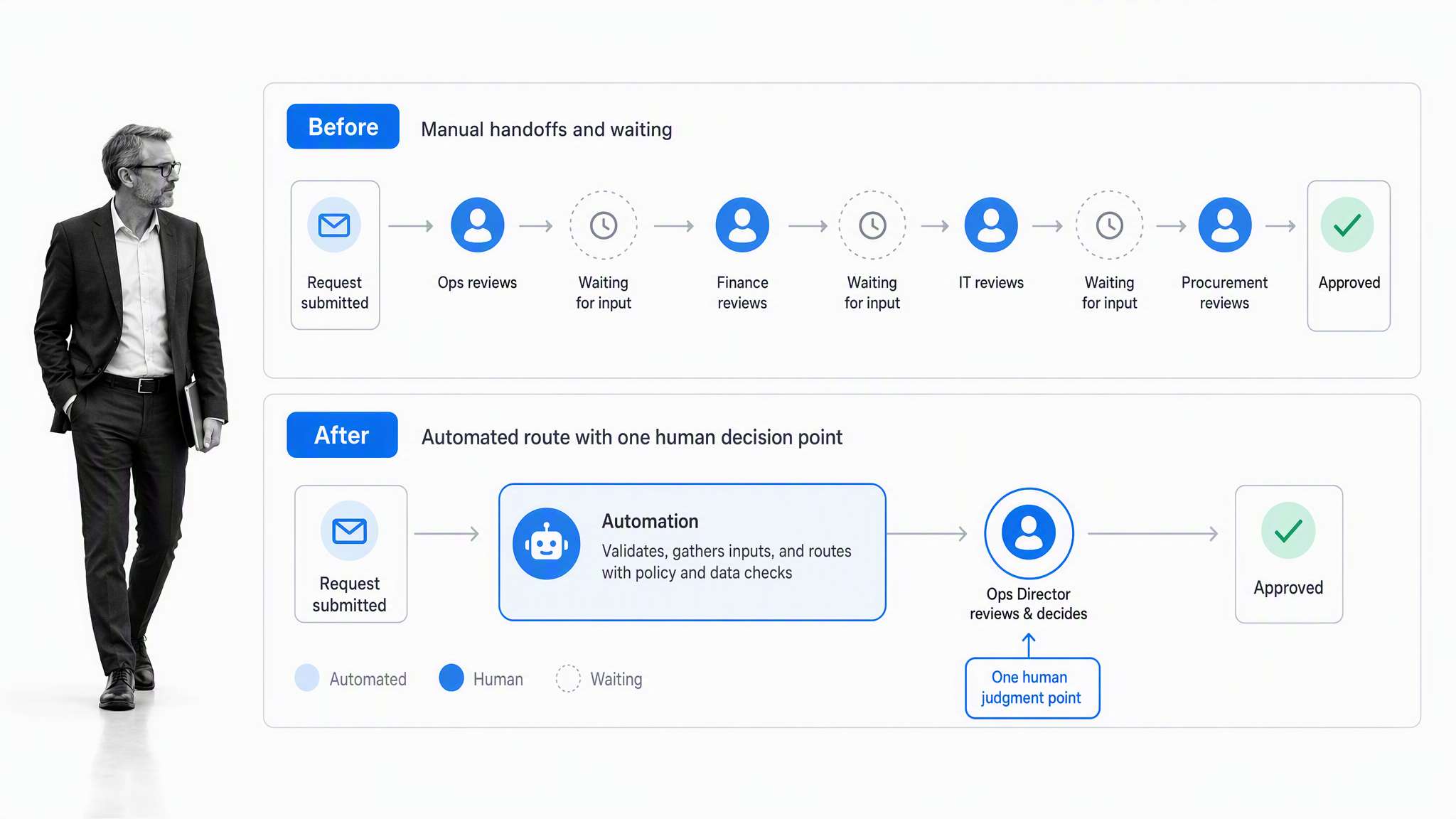
Current market data suggests that the average enterprise loses approximately 20% to 30% of its productive capacity to "coordination tax"—the time spent hunting for information, waiting for approvals, or correcting data inconsistencies across different platforms. By implementing a unified enterprise automation strategy, organizations are reporting significant reductions in these operational inefficiencies. For instance, companies that have moved from manual handoffs to automated, event-driven workflows report a 40% improvement in cycle time for cross-departmental processes like procurement and client onboarding.
Core Frameworks for Operational Efficiency
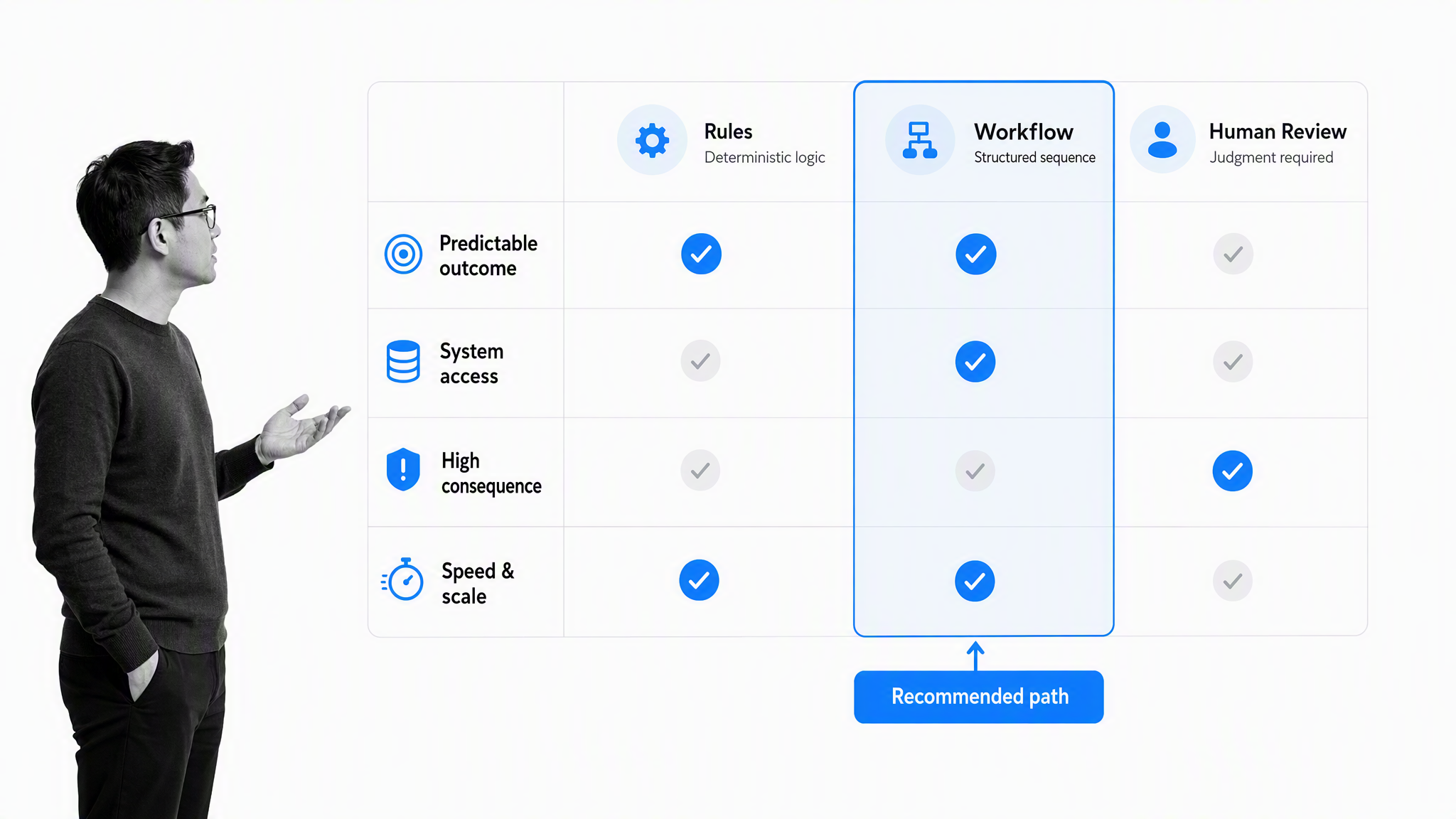
The architectural success of an enterprise automation program depends on selecting the appropriate tool for the specific nature of the work. Industry analysts emphasize that the dividing line is not simply "human vs. machine," but rather a spectrum of risk and context.
Task and Rules Automation
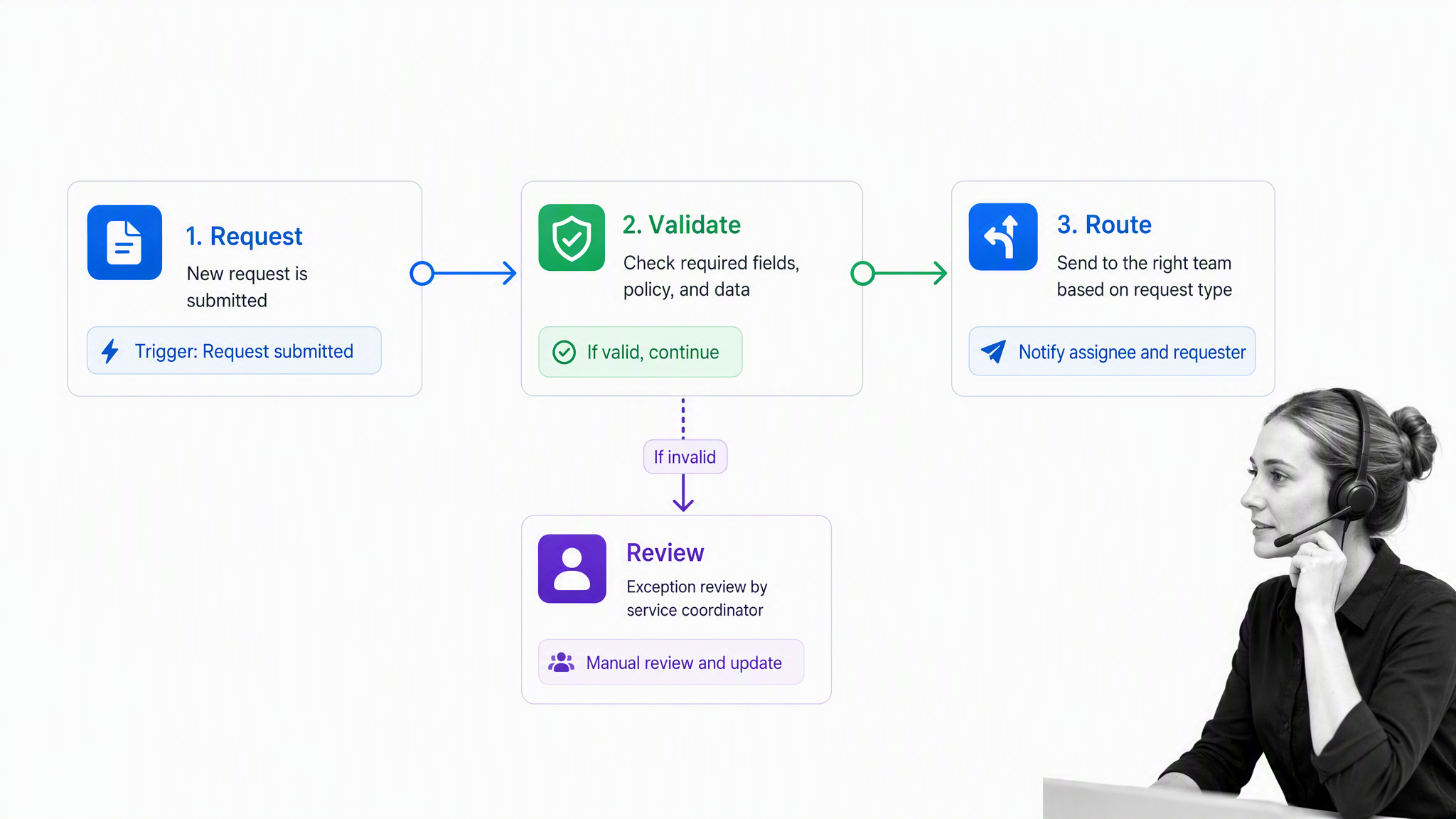
Predictable, low-consequence events represent the entry point for most organizations. This includes simple conditional logic: if a form is submitted with a specific tag, trigger a notification; if a field is missing, flag it for review. This layer provides immediate relief from context switching, as it replaces the "inbox-as-a-task-manager" approach with a centralized, shared state of truth.
Workflow and Process Orchestration
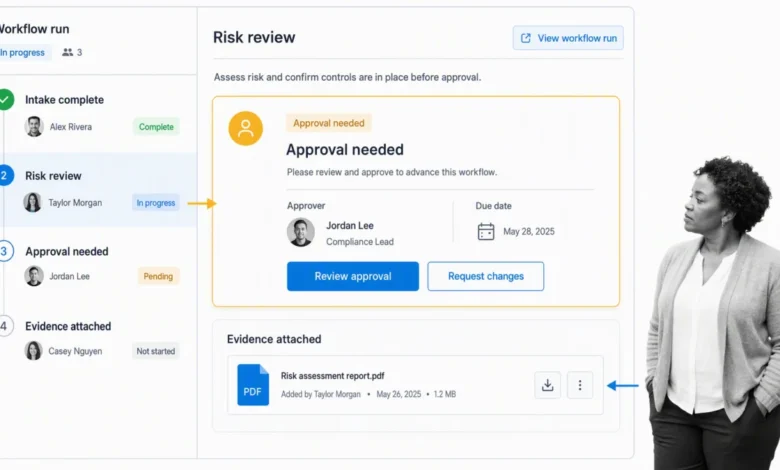
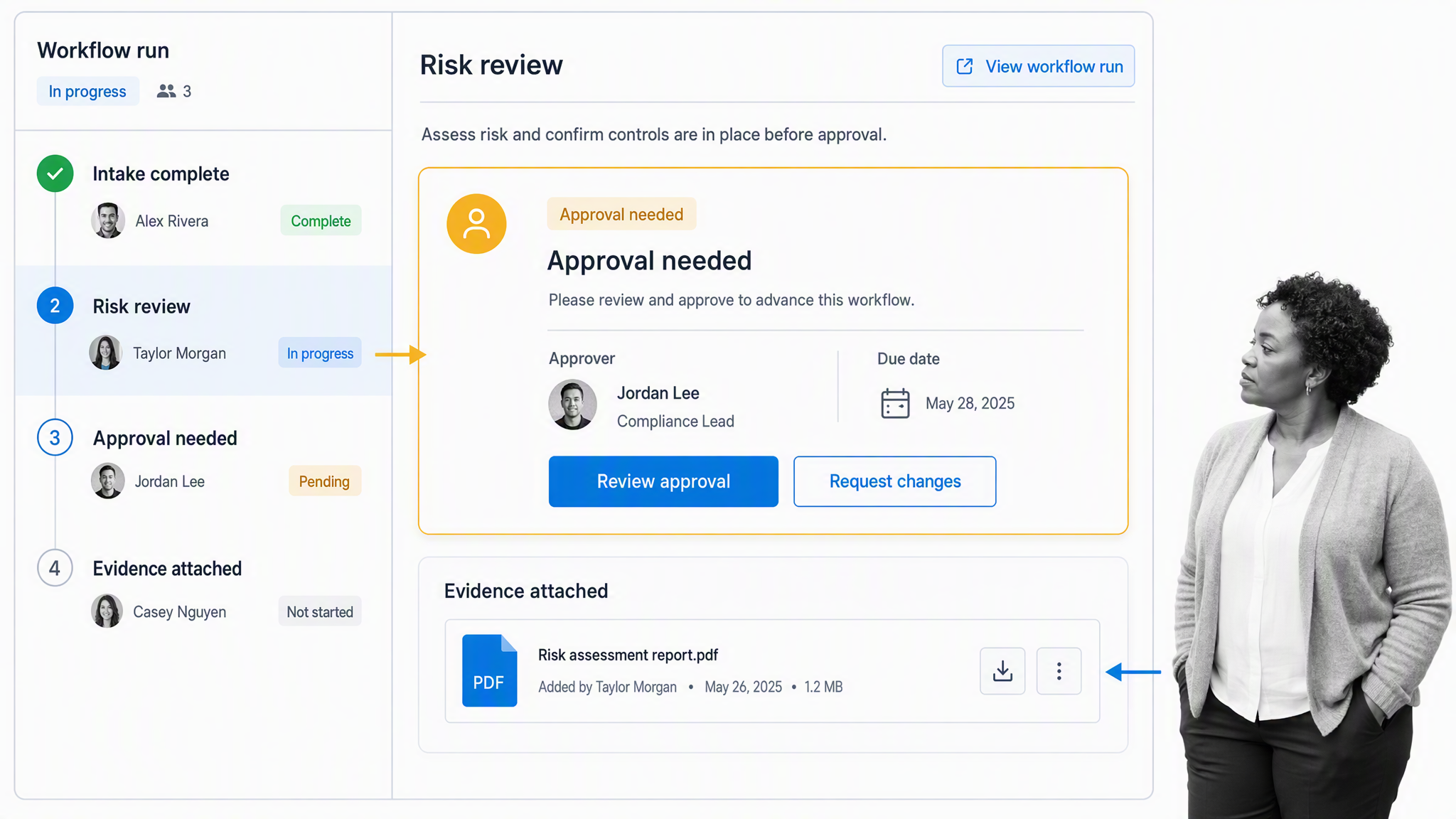
Workflow orchestration elevates the focus from the task to the process. By mapping the end-to-end journey of a business function—such as employee onboarding—organizations can ensure that every step, from security access provisioning to payroll integration, is tracked. This creates a digital audit trail, ensuring that accountability is never lost in a chain of emails. Managers gain the ability to view the "health" of a process in real-time, identifying bottlenecks before they delay project delivery.
Integration and Data Interoperability
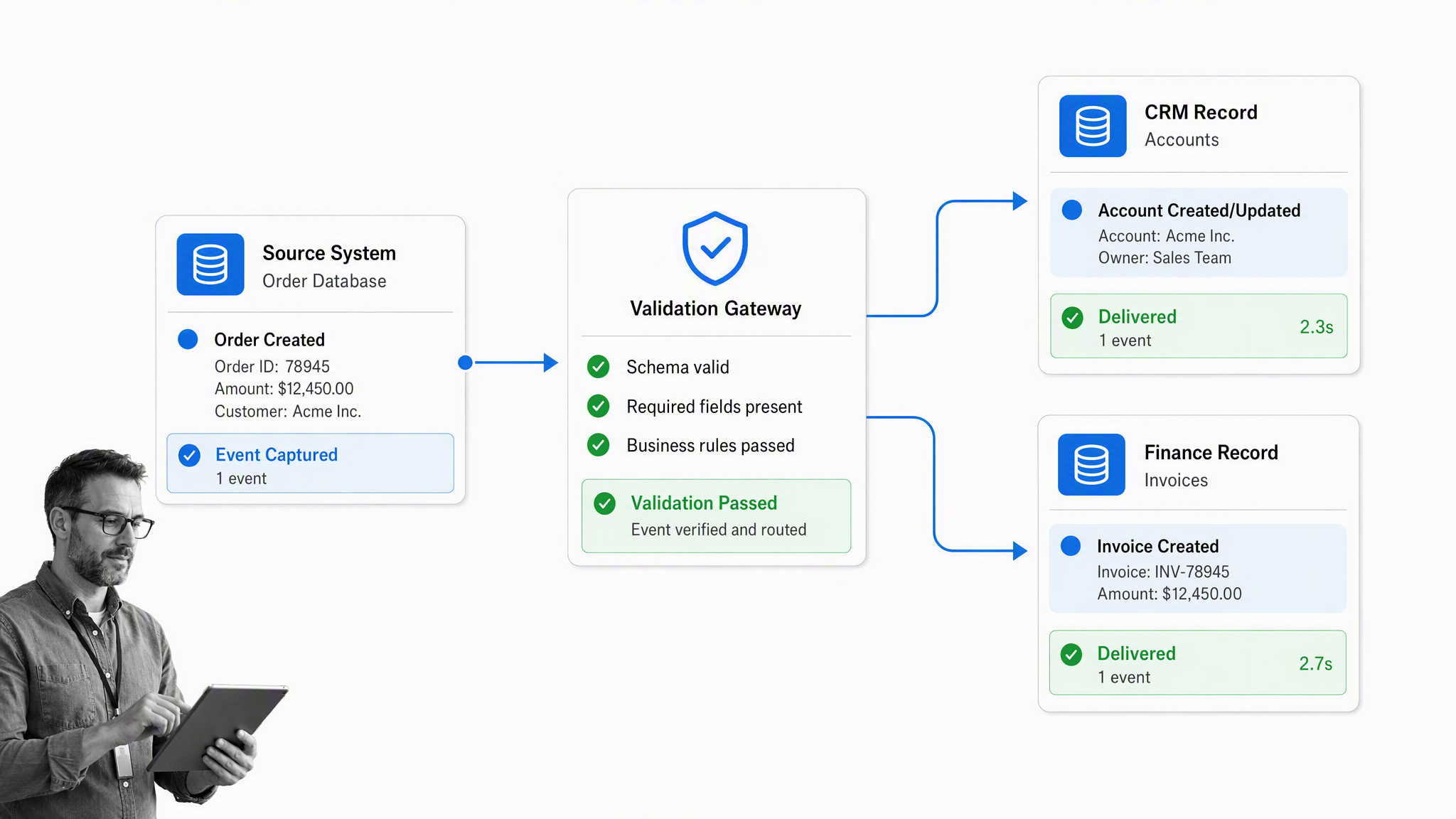
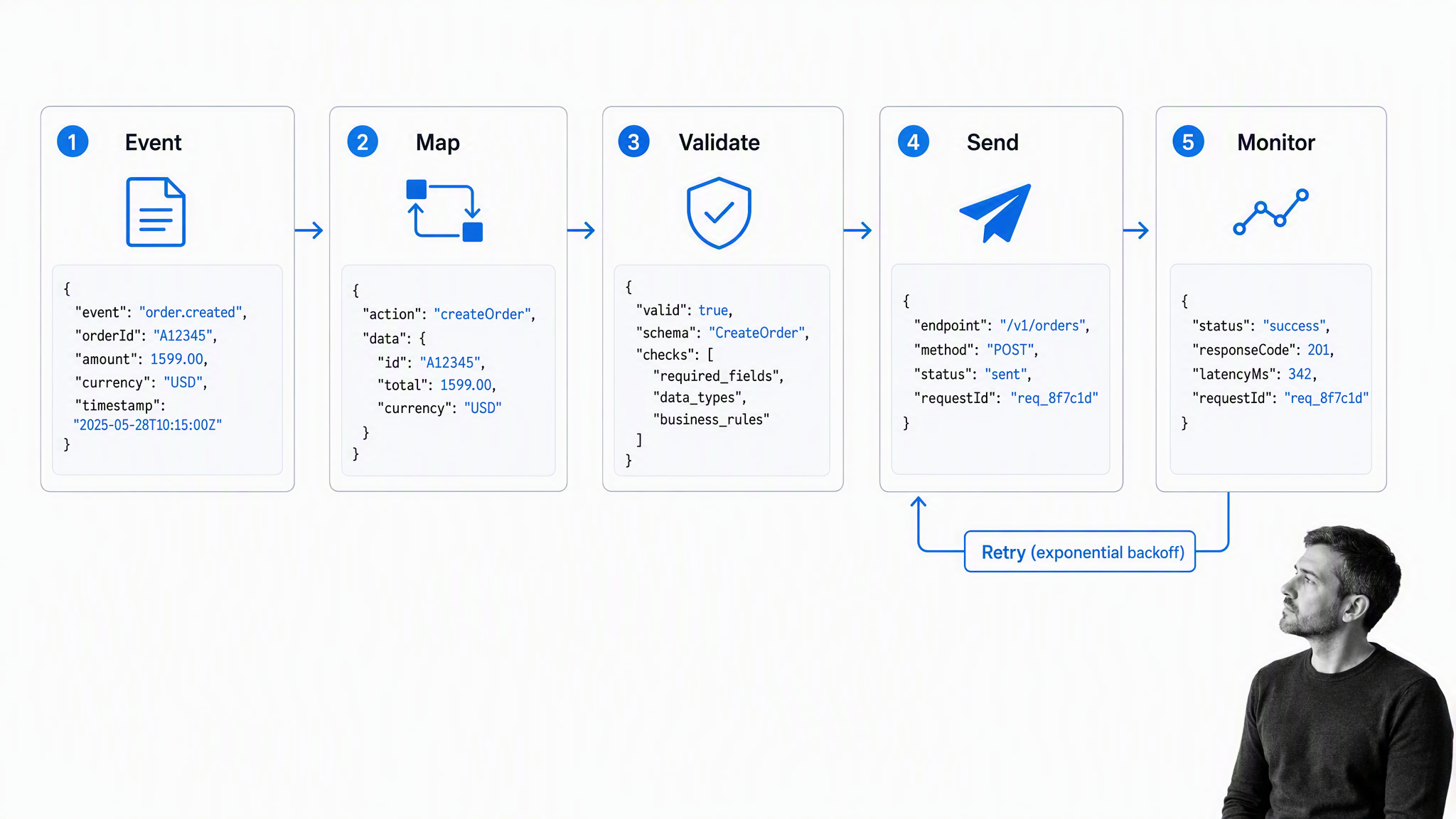
Integration automation functions as the connective tissue of the enterprise. By leveraging APIs and webhooks, organizations ensure that data moves between CRM, ERP, and communication platforms without human intervention. The critical component here is validation; a robust integration does not just move a string of text, it checks the integrity of the data, confirms delivery, and provides a clear path for recovery if a system experiences downtime.
UI and AI-Assisted Automation
For legacy systems lacking modern APIs, UI automation—or "robotic process automation"—serves as a necessary adapter. By mimicking human interactions with legacy software interfaces, organizations can extend the life of essential tools. Furthermore, the integration of governed AI allows for the processing of unstructured data, such as summarizing long email chains or extracting key terms from legal documents. However, industry experts caution that this must be done under strict governance, with clear human "circuit breakers" for any decision that carries financial, legal, or reputational risk.
Strategic Implications and Human Capital
The most significant concern for leadership regarding enterprise automation remains the impact on the workforce. However, internal surveys from firms adopting these systems suggest that the technology is frequently viewed by employees as a tool for job enrichment rather than replacement. When employees are freed from the "drudgery of coordination," they report higher engagement levels. They are empowered to pivot toward roles that require high-level cognitive skills: interviewing, strategic planning, investigating complex risks, and building relationships with clients.
From a managerial perspective, the shift is equally transformative. Leaders no longer need to conduct manual status checks or chase updates across multiple platforms. Instead, they operate through a "management by exception" model. By viewing dashboards that highlight stalled workflows or high-risk bottlenecks, managers can apply their human expertise precisely where it is needed most, rather than spending their time on the minutiae of operational status reports.
Challenges in Scaling Automation
Despite the clear benefits, the path to maturity is fraught with common pitfalls. The most common error is the automation of inefficient or "broken" processes. Automating a bad process simply accelerates the delivery of errors. Therefore, the first step in any successful enterprise automation project is not technical implementation, but process auditing.
Organizations must map their workflows, identify the "happy path" (the standard, successful outcome), and define the exception routes (what happens when things go wrong). Only when the process is standardized and optimized should the technical implementation begin. Furthermore, organizations must guard against the creation of "technical debt." A complex automation rule that no one on the current team can explain or troubleshoot becomes a liability. Documentation and modularity are as important to automation as the code itself.
The Role of Governance and Compliance
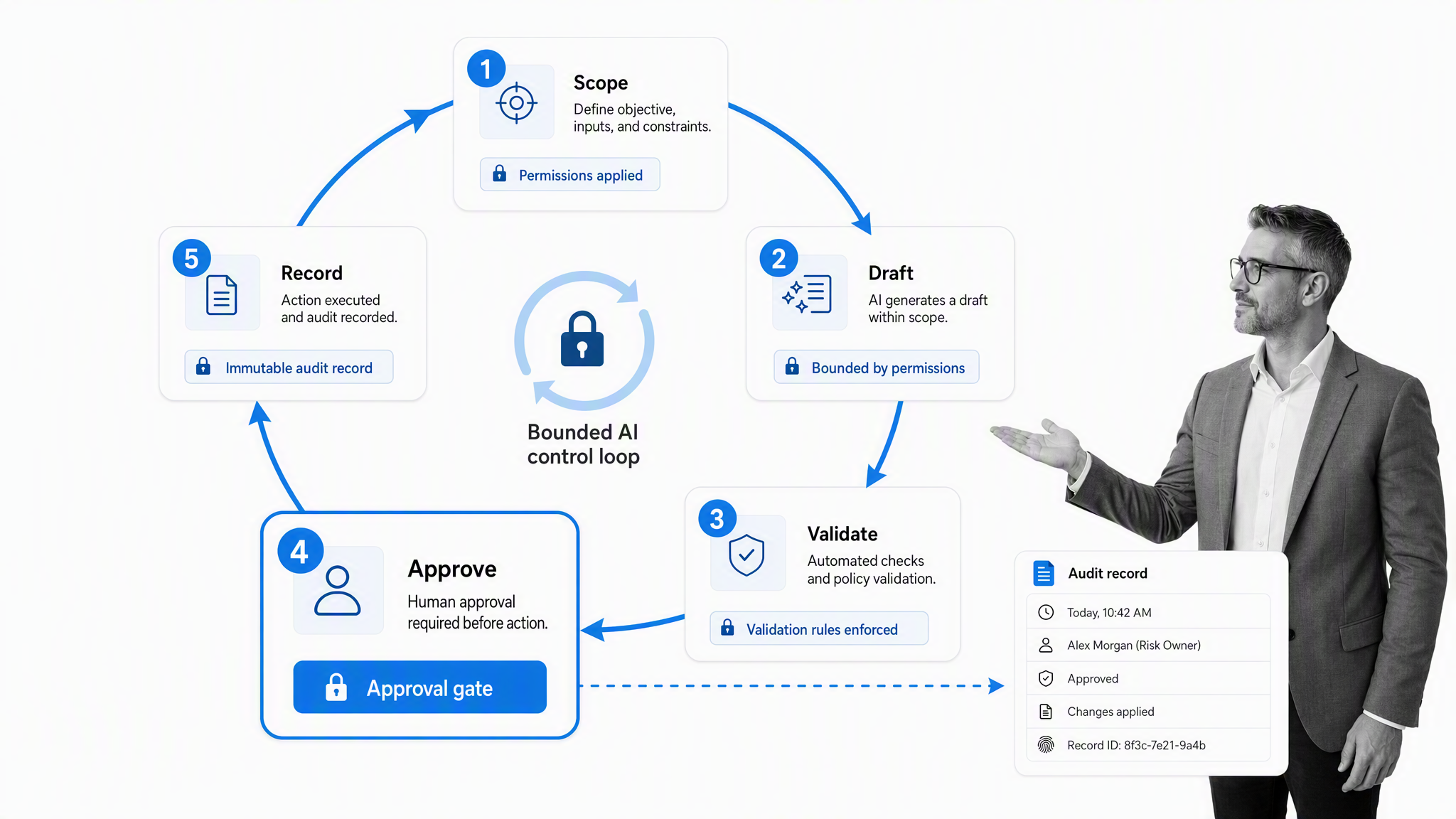
As organizations integrate more AI into their operational workflows, governance frameworks such as the NIST AI Risk Management Framework have become essential. The goal is to create a "bounded" automation environment. This means that while an AI agent may be permitted to draft a response to a customer, it is restricted from finalizing a refund or changing account permissions without human validation.
By maintaining this "human-in-the-loop" architecture, enterprises can scale their operations while maintaining the rigorous controls required by regulators and internal security policies. This transparency is vital for organizational trust. When employees understand the boundaries of the automated systems, they are more likely to adopt them, leading to higher utilization rates and faster ROI.
Conclusion: The Future of Scaled Operations
The goal of 100 employees feeling like 1,000 is not a promise of magical productivity, but a realization of operational leverage. By stripping away the administrative layers that slow down human output, organizations can focus their entire team on the core mission of the company.
The transition to an automated enterprise is a journey of maturity. It begins with the audit of a single high-friction process, moves through the integration of systems, and results in a culture where technology is used to enhance human potential. As businesses continue to face the pressures of a rapidly changing global market, those that can successfully coordinate their people, processes, and systems through enterprise automation will hold a distinct competitive advantage. They will be the organizations that can scale without losing the agility, judgment, and human touch that define their success.