The Evolution of Remote Work for Parents: Balancing Professional Ambitions with Family Dynamics in the Modern Economy

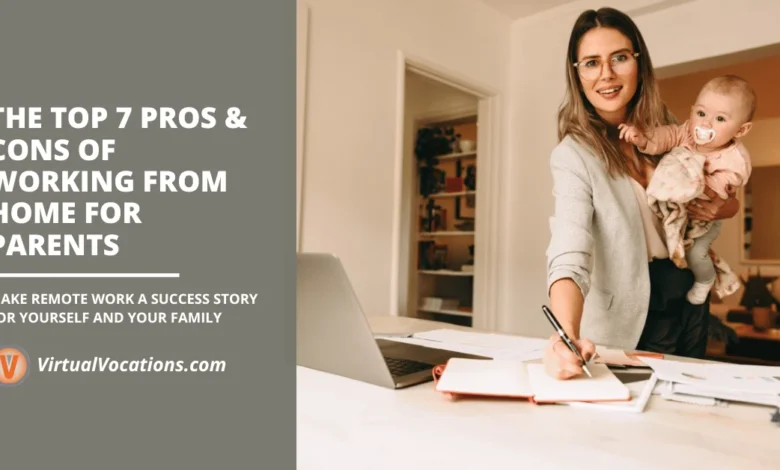
The landscape of modern employment has undergone a profound transformation over the past decade, accelerated dramatically by global events that forced a re-evaluation of traditional office-bound structures. Among the most significant shifts is the widespread normalization of remote work, a structural evolution that has fundamentally altered how professionals manage the intersection of career and family life. For working parents, the transition from rigid corporate environments to home-based offices offers an enticing promise: the ability to seamlessly integrate professional responsibilities with the daily demands of raising children. However, as millions of households continue to navigate this dynamic, a comprehensive examination reveals that telecommuting is far from a simple panacea. It represents a complex matrix of distinct advantages and notable pitfalls that demand careful planning, rigorous boundary-setting, and realistic expectations.
To understand the current state of remote parenting, one must look at the historical trajectory of the modern workplace. Prior to the widespread adoption of broadband internet and collaborative cloud software, working from home was largely restricted to freelancers, independent contractors, or a small minority of corporate employees granted rare telecommuting privileges. The subsequent digital revolution, punctuated by the massive remote-work experiment of the early 2020s, shattered long-held managerial skepticism regarding productivity outside the physical office. Organizations discovered that technology could bridge geographical divides, leading to permanent structural changes. Today, hybrid and fully remote models are deeply entrenched features of the global labor market, making the balancing act between boardroom and living room a daily reality for a substantial portion of the workforce.
The advantages driving parents toward home-based employment are both logistical and financial. Foremost among these is the promise of heightened schedule flexibility. In many professional roles, remote work liberates employees from the rigid constraints of a 9-to-5 physical presence, allowing them to tailor their working hours around vital family milestones. Whether it is attending a midday school assembly, managing the afternoon pickup routine from extracurricular activities, or simply being physically present during transitional moments in a child’s day, this autonomy fosters a more integrated lifestyle. Furthermore, organizational research increasingly points to tangible productivity gains in remote settings. Data frequently cited from studies by institutions like Stanford University indicates that independent teleworkers can experience significant surges in performance—sometimes registering up to a 13 percent increase—largely driven by the reduction of office-based distractions, minimized commute-related fatigue, and the ability to align complex tasks with individual peak energy hours.
Beyond schedule control and performance metrics, the financial implications of home-based labor provide a compelling incentive for households. The elimination of daily commuting overhead—spanning fuel consumption, vehicle maintenance, parking fees, and public transit passes—yields immediate household savings. Additionally, remote parents save substantially on professional wardrobes and the daily purchase of meals outside the home. Depending on the age of the children and the specific flexibility of the job, some families are even able to optimize or reduce supplementary childcare expenditures, compounding long-term financial relief at a time when the cost of living remains a pressing concern for many families.

Yet, an unvarnished analysis of the remote-work lifestyle dictates that the benefits must be weighed against a distinct set of operational challenges. Chief among these is the omnipresence of domestic distractions. Unlike a dedicated corporate facility, the home environment is a multi-purpose space where professional duties constantly compete with household chores, family interruptions, and the unpredictable needs of children. For parents struggling with time management, these interruptions can fracture focus, degrade output, and extend the working day deep into the evening hours, ultimately threatening the very work-life balance the arrangement was intended to secure.
Career advancement represents another critical area of vulnerability for remote-working parents. Despite technological strides in virtual collaboration, the traditional corporate adage of "out of sight, out of mind" retains a persistent grain of truth. Empirical research published by academic institutions, including joint studies from Harvard University and the University of Iowa, suggests that remote employees frequently receive less direct, spontaneous feedback from supervisors compared to their in-office peers. This reduction in face-to-face mentorship and spontaneous networking can inadvertently stall professional visibility, complicating the pathway toward promotions, high-visibility projects, and long-term career progression.
Compounding these professional hurdles is the psychological toll of isolation. The modern office, for all its bureaucratic frustrations, serves as a vital hub for adult social interaction. Water-cooler conversations, spontaneous brainstorming sessions, and casual peer support play an essential role in maintaining employee morale and mental well-being. Remote workers, tethered to home offices and screens, often report feelings of professional detachment and loneliness. Maintaining sanity in a telecommuting environment frequently requires a conscious, deliberate effort to engineer social touchpoints, schedule virtual check-ins, and cultivate community relationships outside the immediate scope of employment.
To mitigate these systemic drawbacks, organizational psychologists and career coaches emphasize the necessity of deliberate structural strategies. Establishing a physically segregated home workspace is widely regarded as a non-negotiable first step, signaling both to family members and to oneself that professional duties are underway. Furthermore, clear communication protocols—ranging from family ground rules regarding interruptions during peak working hours to proactive schedule-sharing with managers—can drastically reduce friction. Remote parents are similarly advised to aggressively manage their career visibility by scheduling regular one-on-one progress reviews with leadership, volunteering for measurable, high-impact deliverables, and actively documenting their professional achievements.
Ultimately, the decision to embrace remote work as a parent cannot be made in an institutional vacuum. Experts strongly advocate for a collaborative family summit before transitioning to a home-based office. Spouses, partners, and, where appropriate, children must be included in the decision-making process to ensure that the unique requirements of the household align with the demands of the profession. By openly discussing expectations, evaluating the ages and specific needs of the children, and acknowledging the potential professional trade-offs, families can approach remote work not as an improvised compromise, but as a strategically managed lifestyle choice designed for sustainable, long-term success.
Related posts: