The Quiet Legacy: Redefining Leadership Beyond the Metrics of Modern Visibility


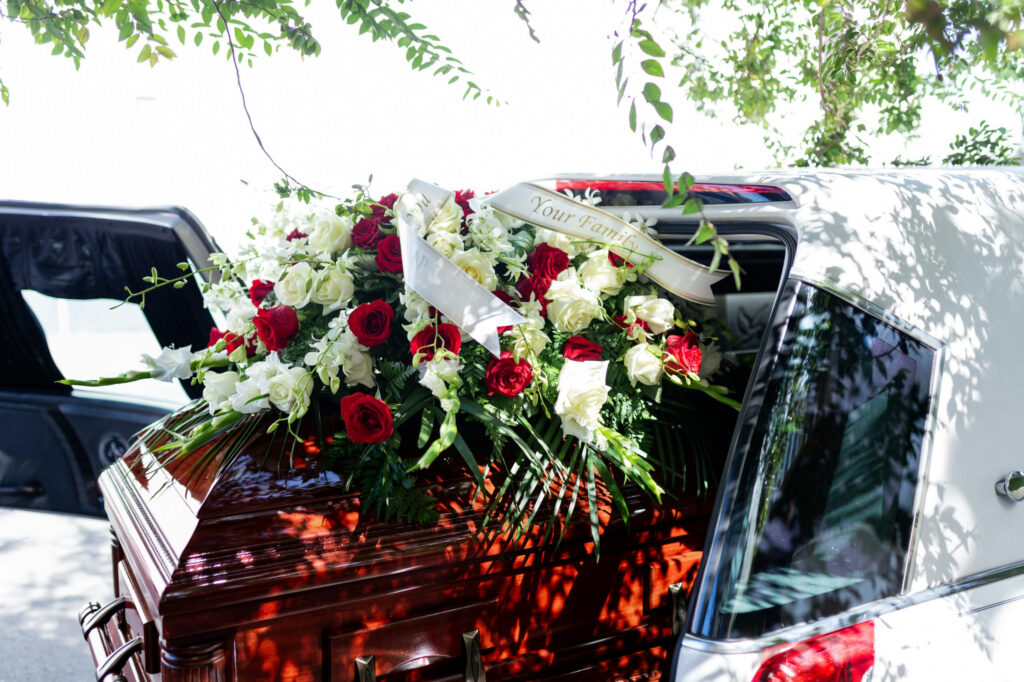
The funeral of a prominent corporate executive, held on a somber, overcast afternoon, served as an unintended case study on the divergence between professional reputation and personal impact. While the deceased had spent decades climbing the rungs of global business, commanding boardrooms and overseeing vast quarterly earnings, the tributes offered during the service were conspicuously devoid of corporate metrics. There was no mention of fiscal growth, market share, or the LinkedIn-curated milestones that typically define a high-profile career. Instead, the narrative focused on the unseen, unquantifiable influence the leader exerted on the individuals within their immediate professional orbit.
The Anatomy of a Memorialized Career
In the hours preceding the service, as attendees gathered outside the church, the absence of typical business posturing was notable. In an era where networking is often defined by the exchange of social currency—name-dropping, status signaling, and the curation of professional influence—the mourners engaged in subdued, authentic interactions. This transition from the competitive sphere of commerce to the introspective environment of a memorial highlights a fundamental tension in modern professional life: the disconnect between public visibility and private, human-centric leadership.
The service itself did not follow the traditional trajectory of a eulogy for a titan of industry. Rather than highlighting grand acquisitions or successful mergers, the speakers emphasized moments of mentorship and quiet intervention. One colleague recalled a pivotal point in her career, stating, "He believed in me during all those years when I couldn’t yet believe in myself." Such testimony points to a reality rarely captured in annual reports: the long-term impact of a leader is measured by the personal trajectory of those they managed, not by the statistical performance of the organization they led.
The Paradox of Reach vs. Resonance
The modern workplace is increasingly influenced by the "visibility economy," a culture driven by social media algorithms that prioritize reach, follower counts, and engagement metrics. According to data from the 2024 Global Workplace Analytics report, nearly 65% of mid-to-senior level professionals report feeling increased pressure to maintain an active, curated personal brand to ensure career longevity. This shift toward performative leadership often creates a false sense of value, where attention is erroneously conflated with tangible impact.
The implications of this cultural shift are profound. When leadership is reduced to a series of quantifiable metrics, the "small circle"—the immediate team and the direct reports who witness a leader’s character during times of crisis—is often overlooked. Analysis suggests that while broad visibility may facilitate career mobility, it does not necessarily correlate with the cultivation of long-term trust or the development of organizational culture. In fact, research from the Institute for Corporate Productivity indicates that organizations led by individuals who prioritize deep, one-on-one mentorship retain talent at a rate 22% higher than those where leadership is primarily focused on external visibility and brand management.
Chronology of Influence
To understand the divergence between a leader’s public image and their enduring legacy, one must look at the timeline of human interaction within an organization:
- The Inception Phase: The initial period of professional association, often characterized by skepticism and the observation of the leader’s adherence to corporate culture.
- The Stress Test: A period of organizational challenge or personal difficulty for an employee, where the leader’s true character is revealed through their response to adversity.
- The Transformation Period: The phase where a mentor’s consistent, quiet support fundamentally alters the professional trajectory of a protégé, often without public acknowledgment.
- The Legacy Consolidation: The period following a leader’s departure or passing, where the cumulative weight of those quiet, transformative moments crystallizes into a reputation that transcends job titles.
Institutional Responses and Expert Perspective
Management theorists have long debated the efficacy of "servant leadership"—a model that mirrors the behaviors observed at the recent funeral. Dr. Elena Vance, a scholar of organizational psychology, notes that "the transition from ‘visible leader’ to ‘legacy leader’ is marked by a shift in motivation. Visible leaders look for audiences; legacy leaders look for growth in others. The irony is that the latter almost always builds a more resilient institution, even if it happens without the fanfare of the former."
Recent corporate surveys suggest that a majority of high-performing employees identify "individual attention" and "moral courage in crisis" as the top two traits they admire in leadership. Conversely, "public accolades" and "industry speaking engagements" ranked near the bottom. This data suggests a significant disconnect between what corporate HR departments incentivize and what employees actually find meaningful.
The Cost of Performance
The drive for visibility often leads to a phenomenon known as "leadership fatigue," where the executive becomes more concerned with the maintenance of their personal brand than the health of their team. This fragility is inherent in any system that requires constant validation from external sources. When the image is the primary asset, the slightest failure can result in a disproportionate loss of credibility.
Conversely, leaders who invest in the "small circle"—the colleagues sitting across the table—build a foundation of trust that is inherently resilient. This trust is built in the hallways, in the difficult conversations held behind closed doors, and in the moments when a leader chooses to advocate for an employee at personal cost. This is the "coin of the realm" that holds value at the end of a career.
Implications for Future Leadership Models
The lessons from this funeral are applicable across sectors, from tech startups to established financial institutions. As organizations move toward increasingly remote or hybrid environments, the danger of prioritizing performative visibility grows. Leaders who rely on digital metrics to judge their own success risk losing the human element that fosters loyalty and innovation.
The shift required is not an abandonment of results—as business, by definition, requires the achievement of specific goals—but a re-prioritization of the "ceiling." If results are the foundation of a career, then the development of people is the true ceiling. The most enduring legacy of a leader is not found in the number of views a company announcement receives, but in the number of individuals who felt empowered to succeed because of that leader’s guidance.
Conclusion: The Architecture of a Lasting Mark
Ultimately, the funeral of this executive served as a stark reminder that we are not remembered for the titles we held or the LinkedIn connections we amassed. We are remembered for the quiet, often invisible work of changing the lives of those within our immediate influence. The small circle is not a limitation; it is the arena where real, lasting transformation occurs.
As professional environments continue to evolve, the distinction between "leaving a mark" and "simply leaving" will become increasingly clear. Those who choose to focus on the depth of their relationships, rather than the breadth of their reach, are the ones who build organizations that survive their absence. The metrics of the digital age—the likes, the followers, the reach—are ephemeral. What remains, when the pressure of the workday fades and the final account is tallied, is the weight of the lives one has touched. That, and nothing more, constitutes the final assessment of a life’s work.