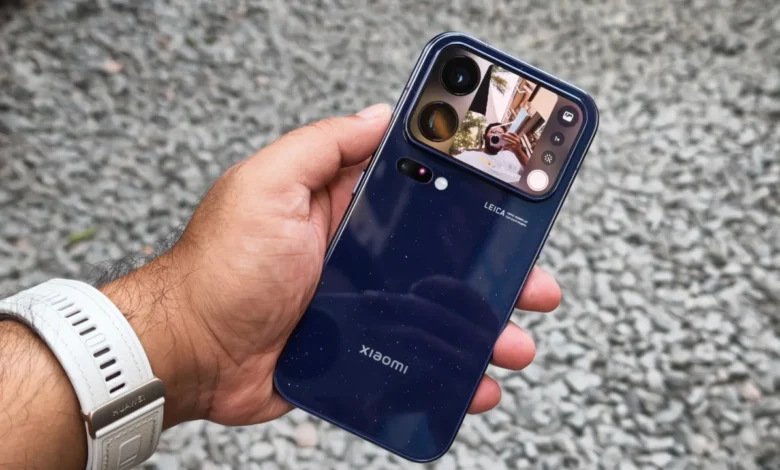
The high-end smartphone market of late 2026 is heavily saturated with massive folding screens, experimental dual-screen devices, and oversized camera flagships that often sacrifice ergonomics for raw capability. Against this backdrop, the arrival of conventional slab phones can easily feel repetitive. Yet, following a brief hands-on period with the global variant of the Xiaomi 18 Pro ahead of its official international launch scheduled for November 17 in Paris, the device has quickly emerged as an outlier in the premium category. Squeezing high-tier processing architecture, dual 200-megapixel camera optics, and a secondary rear display into a relatively compact form factor, Xiaomi has engineered a conventional flagship that manages to deliver genuine distinction without leaning into gimmicks.

Main Facts and Hardware Overview
Positioned directly between standard flagship offerings and ultra-premium max variants, the Xiaomi 18 Pro arrives with specifications designed to compete aggressively against market leaders from Google, Samsung, and Vivo. Built around a polished aluminum alloy frame and a reflective, soft-touch glass back available in a striking Cosmic Blue finish, the device maintains a robust structural integrity reminiscent of top-tier industry standards. Weighing in at approximately 200 grams, it matches the heft of devices like the Google Pixel 11 Pro while retaining a footprint optimized for single-handed navigation.

Beneath the sleek exterior, the device is powered by Qualcomm’s Snapdragon 8 Elite Gen 6 chipset, delivering rapid execution speeds and fluid day-to-day multitasking. Visual output is handled by a flagship-grade front panel characterized by remarkably thin and symmetrical bezels, offering an uninterrupted viewing area. However, the most talked-about hardware additions are the integration of a secondary display housed within the expansive camera module on the rear, and an advanced Privacy Display function designed to mitigate unauthorized side-angle viewing.
Chronology and Launch Timeline

The development and rollout of the Xiaomi 18 Pro follow a structured international release strategy typical of the manufacturer’s flagship tier. Initial production models entered validation testing in late summer, followed by regional announcements directed at domestic markets in Asia. The current phase centers on the global media briefing cycle, culminating in the official European launch event scheduled for November 17 in Paris, France. Review units distributed to international technology publications ahead of this date have given industry analysts their first comprehensive look at the global software build running HyperOS 4, complete with localized regional adaptations and connectivity standards suited for European and international networks.
Supporting Data and Design Ergonomics

The physical construction of the Xiaomi 18 Pro highlights a deliberate balancing act between aesthetic appeal and practical usability. The Cosmic Blue colorway utilizes a reflective glass treatment that yields a silky tactile texture. However, this high-gloss finish presents predictable physical trade-offs: the chassis is highly susceptible to fingerprint smudges and environmental dust accumulation under direct lighting conditions. Furthermore, the smooth glass surface yields a slippery grip in hand, making the inclusion of the bundled protective case in the retail packaging a functional necessity rather than a mere bonus. It is worth noting that, in compliance with evolving European regulatory standards and regional retail trends, European review and retail configurations exclude a dedicated wall charging brick from the box, supplying only the handset, documentation, and a standard USB-C interface cable.
The prominent rear camera island serves a dual purpose beyond housing high-end optics. By integrating a secondary auxiliary screen directly into the module layout, Xiaomi has adopted a design philosophy reminiscent of high-end consumer electronics trends while imparting a distinct visual signature. This secondary panel transcends mere cosmetic branding, serving as a functional viewfinder for high-resolution self-portraits utilizing the primary rear sensor suite, as well as an interactive hub for media playback controls and glanceable notifications.

Software Ecosystem: HyperOS 4 and Customization
Operating on HyperOS 4, the Xiaomi 18 Pro continues the brand’s tradition of offering deep interface personalization, allowing users to modify lock screen animations, Always-On Display layouts, and comprehensive theme packages. The interface emphasizes speed and responsiveness, though it also reflects broader industry design trends toward translucent, Liquid Glass-inspired visual layers. While this aesthetic aligns with contemporary interface design standards seen across major operating systems, some industry observers note a growing fatigue regarding heavily layered translucent effects.

In terms of functional software additions, the device incorporates Motion Assist—a quality-of-life feature aligned with Android 17 specifications designed to minimize motion sickness during vehicular transit. Conversely, the division of the notification shade and quick settings toggles into separate swipe gestures mirrors the layout popularized by Apple’s iOS and adopted by various Android manufacturers. Unlike competitors that provide an option to revert to a unified drop-down menu, Xiaomi’s current global build lacks this specific layout flexibility, though extensive visual customizability elsewhere compensates for the rigid notification panel structure.
Display Technology and Privacy Engineering

The front-facing display panel stands as a core engineering achievement for the 18 Pro, pairing advanced refresh-rate technology with razor-thin bezels. Beyond standard metrics of color reproduction and peak brightness, the inclusion of a proprietary Privacy Display mode marks a significant advancement in mobile security. Similar to privacy-focused display technologies deployed in competing ultra-premium handsets like the Samsung Galaxy S26 Ultra, Xiaomi’s implementation actively restricts off-angle visibility to prevent visual eavesdropping in public spaces.
Initial evaluations of the technology suggest that Xiaomi’s approach is slightly less aggressive than Samsung’s hardware-level filtering, yielding a more favorable retention of overall color vibrancy and optical clarity when the privacy filter is engaged. This engineering compromise prioritizes visual fidelity without entirely sacrificing data protection, establishing a nuanced alternative for users who frequently handle sensitive information in public environments.

Optics and Leica Collaboration
Imaging capabilities remain a cornerstone of Xiaomi’s flagship strategy, driven by an ongoing partnership with legendary optics manufacturer Leica. The Xiaomi 18 Pro incorporates an advanced camera array featuring a 200-megapixel primary wide sensor alongside a 200-megapixel telephoto lens utilizing a 75mm equivalent focal length and a large 1/1.56-inch sensor. This robust telephoto hardware promises high-detail capture across medium-range zoom parameters, though certain advanced processing technologies—such as LOFIC (Lateral Overflow Integration Capacitor) sensors found exclusively on the larger Pro Max variant—are omitted from this more compact model.

The software interface introduces the new Leica Original shooting mode, joining the established Leica Vibrant and Leica Authentic color profiles. The Original mode offers a distinct color interpretation designed to minimize the heavy edge vignetting characteristic of traditional Leica aesthetic profiles, catering to users seeking color neutrality without sacrificing photographic character. Essential mode and other software-driven shutter tools further expand the device’s photographic versatility.
Broader Industry Impact and Market Implications

The introduction of the Xiaomi 18 Pro into the global flagship arena underscores a shifting industry priority toward packing uncompromised hardware into manageable, non-folding footprints. By pairing the Snapdragon 8 Elite Gen 6 platform with innovative physical features like a secondary rear display and a balanced privacy screen, Xiaomi is challenging consumer perceptions of what a conventional smartphone can achieve.
As the official November 17 launch date in Paris approaches, market analysts will be closely monitoring pricing strategies and regional availability to determine how effectively the device competes against established heavyweights in Western markets. While comprehensive evaluations concerning long-term battery endurance, sustained thermal performance under heavy workloads, and rigorous comparative camera testing remain pending, the initial trajectory of the Xiaomi 18 Pro suggests it is well-positioned to command serious attention from consumers seeking power without excess bulk.